

Synopsis
Half way through the pivotal year of 2025, one of the world’s fastest growing sectors – green technology, aka green-tech, or climate-tech – continues to make ever-increasing progress. To help it along its crucial commercialisation journey, RedCAT is working with leading national and world leaders in key positions determined to make this year’s innovative global agenda work in practice.
News (see below) –
Earlier this year, King Charles brought together 350 world CEOs – RedCAT CEO Prof Miranda Barker OBE DL and 2030 Hub founder Stephen Sykes among them – in his Sustainable Markets Initiative. ♦ We discussed small modular reactors (SMRs) with former US Secretary of State John Kerry – the fuel will come from Lancashire – and November’s climate summit with Brazil’s COP30 Ambassador. ♦ Paul Addison, Great British Energy’s Director of Policy and External Affairs, will join us in October to discuss green energy generating technologies. ♦ Stephen considers ESG and low carbon investments. ♦ We also take a first look at green-business barriers and opportunities noted recently by RedCAT. ♦ – and reflect on London Climate Action Week.
Positive so far … what will the rest of 2025 bring?
Away from the headlines the mood music remains optimistic
– There is lots to play for in the run up to COP30
We are now half way through 2025, a year that opened with a new party in power across the pond in Washington and will draw to an end at the controversial but pivotal COP30 UN climate summit in Brazil that could determine which way the dice fall for climate change in years to come.
RedCAT is making positive plans on the assumption that this could be a year of two good halves.
In the first half, continuing progress was made in recognising the need for a low carbon future despite unfortunate and most probably temporary back-sliding on the western side of the Atlantic.
DOGE in the USA may not like the moniker ‘climate’ or ‘global warming’; Coca-Cola PepsiCo, Wells Fargo, HSBC, and Walmart have also conveniently stepped back from their low carbon pledges. FedEx could miss its goal for half of its delivery truck purchases being electric in 2025. The list goes on.
But negative headlines aside, for the world in general the first six months have been more positive than they might appear and have serious support.
A green rose by any other name is just as sustainable
Many committed companies are quietly re-framing their green targets as economic gains, part of a wider social needs strategy, or simply the environment, to avoid short-term negative political labelling.
However, innovative green-tech or climate-tech is alive and well, has a rosy future, and is part of one of the largest continuously growing sectors globally to offer cutting-edge business solutions.
The tone for this year was set in March by a major gathering of more than 350 global CEOs brought together by King Charles at Hampton Court as part of his Sustainable Markets Initiative to put sustainability at the heart of global value creation.
The King and Us
RedCAT and two of our successful innovation companies – AMP EV and Carbonbit – were present at Hampton Court. His Majesty is aware of RedCAT and is very supportive of what we are doing. We hope to welcome him to the Northwest soon.
He believes sustainability is good for business for multiple reasons and wants to trigger action between world leaders and CEOs with the aim of mobilising trillions of dollars to create a sustainable future.
Investment at this scale needs global systems-level change with a default sustainable position across markets, industries and supply chains. To achieve this, his Initiative is driven by two mandates.
Terra Carta places sustainability at the heart of the private sector and provides a set of principles up to 2030 that put Nature, People and Planet at the heart of global value creation.
Astra Carta meanwhile provides a framework to inspire sustainability across the space industry and to consider environmental and sustainability impacts beyond planet Earth.
Talking heads
Hampton Court was an opportunity to talk to former United States Secretary of State John Kerry and UK ministers about global progress with small modular reactors (SMRs) that are set to become part of the UK’s future energy mix.
We also spoke Brazil Ambassador for COP30 – André Aranha Corrêa do Lago – about business and economic reasons for attending the 2025 UN Climate Change Conference in Belém, Brazil, in November.
Northwest businesses that would like to discuss joining our RedCAT trade mission to COP30 can talk to us by contacting Jamie Parker-Jervis.
Another of our conversations was with Jon Banner, Executive Vice President and Global Chief Impact Officer for McDonald’s, about the global supply chain’s impacts and how adopting green technology could be one of the solutions.
A further RedCAT priority will be work closely with CEOs who are also climate philanthropies and will hopefully give us their support.
The February convention was also an opportunity to meet Paul Addison, Director of Policy and External Affairs. He is responsible for shaping and delivering Great British Energy’s policy agenda and strategic communications activity.
As we move into the second half of 2025, we look forward to Paul holding a roundtable meeting with a small group of RedCAT members to discuss the problems and opportunities involved with green energy generating technologies.
London Climate Action Week
The event was also a busy green action week in London
The end of June saw London Climate Action Week (LCAW) now in its 7th year as Europe’s largest city-wide climate festival. The week also saw the British Chambers of Commerce (BCC) 2025 Global Annual Conference which this year focused on ‘Future of the Economy: Where’s the Growth?’.
RedCAT believes green-tech, aka clean-tech and climate-tech, is part of the answer and Miranda chaired the conference’s Green Innovation Panel with a theme of ‘Unlocking low carbon technology deployment to drive growth’.
The panel included representatives from Lancashire industrial refrigeration CO2 system innovator and specialist isentra, IEMA , the Climate Change Committee and sponsor Heathrow.
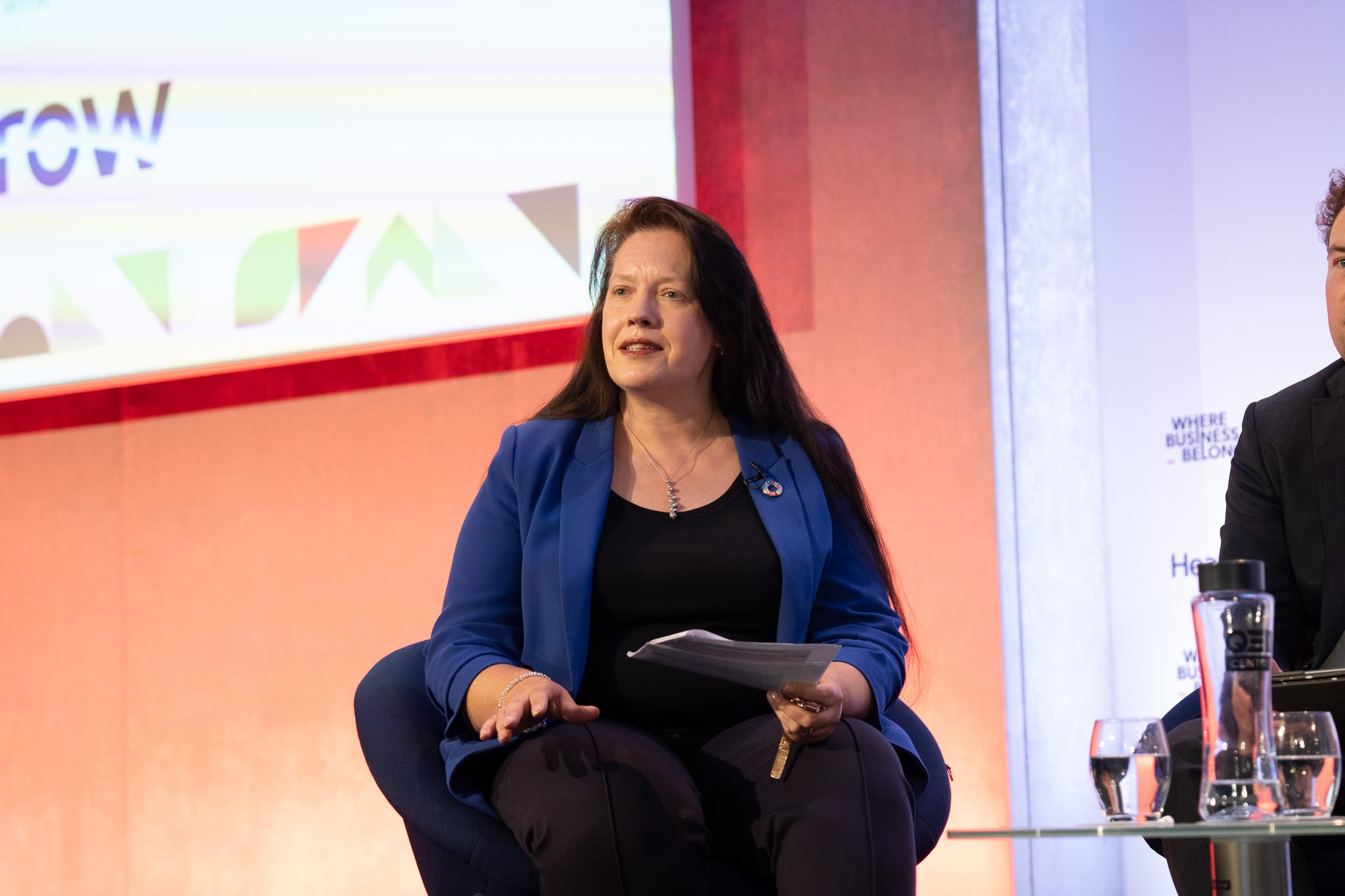
As explained below, a new BCC report primarily composed by a RedCAT SME think-tank will be published soon explaining how the UK can remove barriers hampering the commercialisation of new low carbon tech.
During the week, Miranda also spoke at the UK Business Group Alliance for Net Zero (BGA) Business Leaders’ Summit where Secretary of State for Energy Ed Miliband described the falling price of renewable energy as “… the economic opportunity of the 21st century”.
Miranda also addressed the B4NZ (Bankers for Net Zero) Powering Green Growth event on ‘The Role of SMEs in Driving a Net Zero Economy Roundtable’ and launch of the B4NZ report ‘From Burden to Benefit, Streamlining SME data sharing to unlock green finance and economic incentives’.
Unlocking low carbon investments
The rise of ESG and ESG metrics …
… And the fall that can be corrected!
In the complex and fast-moving world of venture capital and investment, one three-word term has become a popular investment yardstick – environment, social, governance (ESG).
Used correctly, ESG is a powerful risk management tool for prospective investors keen to analyse and understand not only the underlying technologies but also real benefits that good investments can deliver in terms of profitability, environment, and social gains.
ESG can help to mitigate regulatory and reputational risks for example where it is important to avoid (E) companies relying on diesel logistics which could face future emissions penalties; (S) suppliers with repeated human rights violations in overseas factories; and (G) where tech startups have no independent directors or internal audit controls.
As such, professional investors are increasingly using ESG to identify, evaluate and mitigate risks as part of their due diligence and good portfolio management.
But there is a problem, as East Lancashire Chamber of Commerce Director of Sustainability Stephen Sykes explains.
Sellers as well as buyers now use ESG
Unhelpfully, ESG is also being used as a PR and marketing aid to promote run-of-the-mill investments that have no distinctive merits. Based on retrospective compliance and compliance reporting, inconvenient bad news is often easily ignored or simply edited out – which helps no-one.
A prominent greenwashing example was Volkswagen’s “clean diesel” vehicles marketed as environmentally-friendly in meeting emissions standards. It was later discovered VW had installed software to make its cars appear far less polluting than they actually were.
The result in a world overloaded with reporting standards is reams of mundane compliance documents churned out by CSR and environmental managers who would be more effective if they focused instead on forward-looking excellence and innovative progress.
However, systems such as the Global Reporting Initiative (GRI) which offers guidelines and standards for businesses to report their ESG performance are important.
What ESG should do
The bottom-line is that ESG should be a proactive search for real risks and mitigation assurances and not simply a passive box-ticking exercise used by corporates to buy their way out of responsibility.
Effective ESG should help investors to understand how a target company works, how its founders, executives, and managers think, its supply chains and geographical context, plus its internal principles and underlying culture.
In practice, this means considering from the outset how the actions of individuals working alone or company operations might affect employees, customers, shareholders, investors, communities, plus anyone living, working, or playing nearby or downstream.
Innovators create ESG value
But as Stephen explains below, in this confusing environment, the green-tech products and services developed and commercialised by RedCAT’s innovators DO represent true ESG value in as much that they create positive improvements over and above just making money.
Genuine ESG issues should be shown clearly on the balance sheet and not just reported in complimentary subjective terms, he says. He also believes strongly that nature nurture and conservation and sustainable management issues be on the balance sheet under ESG.
An integrated tool – not a bolt-on
That being said, to help investors responsible innovators such as those at RedCAT need to integrate ESG issues clearly into their work. Talented innovators may be tempted to think that their low carbon inventions need little additional substantiation. They are wrong and ESG can help.
ESG assurance and reassurance
A key point is that would-be investors are asked to on take substantial financial risks. To do so safely, they need the measurable and reproducible yardsticks to quantify risks and potential performance that ESG provides.
Which is why environment and governance, plus income and gender equality, and working condition issues figure highly in the RedCAT low carbon commercialisation journey.
It also explains why we have seen a significant interest in B Corp Certification. If you would like to know more about B Corp Certification and how RedCAT/Chamber Low Carbon can help contact David Jolliffe.
A helpful tool is a new guide released in June 2925 – ‘ESG Reporting Frameworks: A comprehensive guide & list’.
More benefits as projects progress
With a sound ESG start there are usually more future benefits to come.
As investment stages progress through seed, early stage, and growth funding, more ESG information becomes available. This can be used to tilt reporting towards environmental issues which could be good news for low carbon green-tech.
RedCAT green-tech in ESG action
Lancashire-based isentra and River Power Pod (RPP) provide two highly-innovative RedCAT ESG examples.
In 2006, isentra recognised a major refrigeration industry change would replace environmentally-destructive HFC refrigerants with alternatives that meet new F-Gas legislation. It now designs, manufactures, monitors and maintains large 75KW to 2MW ‘transcritical CO2’ refrigeration plant, heating, and hot water systems which can include heat recovery.
isentra has also engineered and developed same technology into advanced CO2 heat pumps for space heating, hot water systems, and heat recovery for the commercial/industrial marketplace.
Meanwhile, RPP is an innovative example of how green-tech can support UN Sustainable Development Goals and help the UK meet its 2015 Paris Agreement (COP21) commitments.
RPP makes it possible for local people to collect waste plastic bottles and use them to 3D-print mini-turbines that gather wasted watts from local waterways in remote communities for just pennies or cents. RPP development in the UK is also focussed on commercial designs for industry.
New RedCAT study and report will help the Government boost the economy
Climate-tech role in ‘Invest 2035; the UK’s modern industrial strategy’
– Clean green solutions are central to Britain’s new growth mission
The economic environment is changing rapidly – from the rise of AI and rather bumpy drive for net zero to mounting business costs. But there are also opportunities if the right support is put in place from the Government which recently released its new 10-year UK industrial growth plan.
– New RedCAT intel sent direct to Government to help remove growth barriers
The British Chambers of Commerce (BCC) was asked by the Net Zero Committee to provide insights into how to remove innovation barriers. A RedCAT technology think-tank is driving the discussions behind a report on problems and potential solutions that will go to the Secretary of State for Energy Ed Miliband this autumn – ‘Unlocking the opportunities of low carbon technologies in the UK – removing the barriers to commercialisation’.
The report will be developed and finalised through summer 2025 in several stages: –
1 – Outline RedCAT proposals presented to the Delivery Group …
In June, as a DESNZ Net Zero Council Delivery Group member, RedCAT CEO Prof. Miranda Barker OBE DL unveiled a preliminary series of RedCAT funding and policy recommendations that the Government could implement to turn a rapidly expanding green-tech sector into even more of a primary UK growth driver.
2 – Outline RedCAT proposals presented in to the Net Zero Council …
Additionally, because one of the roles of the delivery group is to provide information, Miranda was also able make an overture presentation of RedCAT’s proposals directly to the Net Zero Council.
3 – Proposals discussed in more detail by RedCAT Network members and guests …
Also in June, an interactive RedCAT Network meeting of innovators, financial specialists, business professionals and guests added further thoughts.
4 – The full report will go to the Energy Secretary in late-summer/early-autumn …
When complete the report will go to Mr Miliband who is expecting it.
5 – A full presentation will be made to the Net Zero Council
Miranda will make a follow-up full presentation potentially in September.
At a glance …
RedCAT study recommendations, business concerns, and network comments
– Messages for the Government from Northwest green innovators
Although growth concerns made in RedCAT’s initial presentation and raised at the network meeting will be discussed, dissected and expanded at length in the future, an early heads-up of what has been said so far could be useful.
Most importantly, RedCAT’s concisely-focused recommendations are listed below.
The thumbnail articles that follow are not definitive accounts but rather prompts or aide-memoires of observations, comment and recommendations made so far.
Names of individuals and companies have not been included. However, if key points raised strike a bell with anyone – or you would like to have a wider conversation and share your opinions in more detail – do please contact Jamie Parker-Jervis. All views are very much welcome at this formative stage.
Report to Net Zero Council
Recommendations so far…
Funding landscape changes, including the need for funding to cover all stages – from replacement innovation funding to filling the gap left by Brexit. A major change is needed in the delivery of mid-stage funding through Innovation UK to move away from the competitive model, through to late-stage funding with an absolute focus on products, achieving full commercialisation, manufacturing, and sales.
Policy Changes, focusing on revenue-neutral changes to drive the take up of low carbon innovations – including public-sector procurement, planning, baseline standards, Carbon Border Adjustment Mechanism, council tax increases, and consistent EV policy commitments.
Foreign Direct Investment, including the importance of creating in, and for the UK, a proactive, pro-low carbon technology investment environment with the risk metrics and patient capital needed to secure investment into – and the UK manufacturing of – innovative low carbon technology.
Grid connections, including where grid connections need to be accelerated and a roadmap showing how the grid can meet future demands. Current grid capacity is insufficient to meet current demand, let alone future use from 100% EV vehicle use and electric homes. Upgrades are essential.
Removing skills constraints, including capacity to install renewable technology, supporting workers in the transition from the fossil fuel sector into the low carbon sector and increasing low carbon skills within businesses.
RedCAT’s Net Zero Council presentation
“What is holding your business back?”
– Key issues raised in the Delivery Group presentation
The following are summary points made by Lancashire green-businesses: –
Investment …
Investments can take 10 to 15 years to mature. ♦ Climate-tech time horizons can create liquidity problems for VCs. This forces businesses into the non-ideal IPO market. IPO means company ownership is transitioning from private to public. ♦ To avoid being overtaken by European challengers and miss a crucial UK climate-tech opportunity, risk and patient capital (long-term investments) need to be incentivised. ♦ Lancashire (UK) firms are being pushed out of markets by EU competitor countries that give their firms strong government support. ♦ Investors need to give innovative SMEs with good academic projects a chance – the rewards will be positive. ♦ If such projects can be scaled up, Northwest innovators will be market-leaders in Europe.
Funding availability …
The Department for Business and Trade (DBT) is frequently asked if funding is available. Funding is currently mostly through Innovate UK. But accessing it is a competitive challenge for green-tech SME innovators. ♦ The consistent funding expected from DBT is lacking. ♦ However, what can actually be achieved on £5k & £15k match funding is amazing – small amounts make a big difference.
Geographic reach and funding gaps …
Businesses need to be global, regional, or local. But funding is too categorised and siloed. ♦ A discussion is needed about innovation benefits for the Global South and not just UK. ♦ There is also a post-Covid 10k to 500k micro grant environment funding gap. ♦ Changing the nature and timing of grant funding would have a big impact. Making businesses wait 18-24 months stifles innovation.
Reducing carbon …
Artificially high electricity prices create an imbalance. A lack of funding makes decarbonisation from fossil fuels hard for commercial businesses. ♦ A level UK energy price playing field and the recently-announced removal of some green levies should make a transition to clean renewables easier.
Public procurement represents 14% of UK GDP. ♦ The Government must explain what specific policy changes it will make to ensure procurement teams set carbon reduction targets and actively seek out innovative SME solutions to meet them.
Critical minerals …
Valuable metal waste can be recycled for the aerospace sector. But this is only part of an ESG agenda, rather than an economic or policy driven market. ♦ Incentives and a national change in the recycling approach for key materials is required.
Waste …
China was recently reportedly paid £550/tonne to landfill wind turbine blades. ♦ Why is the UK so far behind on this? ♦ Denmark’s Ørsted is committed to sustainably recycling or reusing its wind turbine blades used in the UK. Recycling blades is complex but is the UK preference. ♦ Landfill tax increases have been championed by RedCAT and would instantly elevate recycling rates – albeit with a short-term increase in fly tipping. ♦ A holistic approach in parallel with a funding increase for recycling tech is needed.
Note – In general, UK blade recycling costs are circa £120/tonne. Actual costs depend on tonnage. Old onshore blade can weigh 2 to 5 tonnes; newer medium size blades 8 to 15 tonnes. Industrial onshore blades weigh 36 to 40 tonnes; offshore may be more than 50 tonnes. Therefore, depending on age, UK costs can be between £300 and £6,000 per blade.
Overseas prices and funding …
One local company recently tested local supply chains but found that prices around Blackburn (15 miles away) were three times higher than parts sourced in Italy. This prevents growth and stifles innovative potential.
Foreign direct investment (FDI) …
Another company manufactures in Norway after finding investment funding there rather than in the UK even though its supply chain is within 10 miles of its local site. ♦ One Lancashire-based company manufactures climate-tech in the US because that is where its investor is based.
Grid …
One firm was charged £120k to improve its grid connection. It says, “we have officially run out of power in Lancashire” and its local MP cannot help! ♦ Another had a similar experience. However, the council which is also its landlord stepped in. It encourages firms talk to their local authorities.
Skills …
Vacancy peaks and troughs, and difficulties in finding qualified employees, are reported. ♦ Firms are turning to in-house and other alternative recruitment methods.
RedCAT Network discussions
What Lancashire clean-tech innovators are thinking
Next month we look at some concerns, opportunities, opinions, and suggestions raised by members and guests at June 2025’s RedCAT Network meeting.
