

Synopsis
2026 dawned with a flurry of long-haul flights by European and North American leaders keen to solve the world’s increasingly intractable and costly commercial, diplomatic, economic and environmental problems with short-term transactional trade fixes and long-term exporting. Current disruption in the Middle East has distorted this trend. However, the best answer is to offer potential importers something they really need and want – here RedCAT has a key advantage with low carbon technology designed to meet the green tech challenge! Heat Engineer Software also explains how building a high reputation in Lancashire and across the rest of the UK has won the firm a prestigious decarbonisation contract in Germany with Denmark’s giant Grundfos.
News – (see below)
♦ A new study shows that with UKEF export credit support, UK businesses and supply chain exports added £23 billion to the UK economy in the last half decade, and supported circa 66,000 full-time equivalent jobs annually across key industrial sectors. More than 100,000 businesses are now part of export-linked supply chains on the UK Export Finance credit agency customer database. Read more..
♦ A new research paper shows that without urgent emission cuts, circa 41% of the world’s population will face extreme heat by 2050 with a 2°C rise. The tropics and southern hemisphere will be hit worst – but the north will struggle to adapt. Read more..
♦ CO2 levels are rising too fast to meet a temperature rise target of just 1.5°C, say Met Office scientists, with a recent decrease only representing a small short-term slowdown linked to a temporary strengthening of natural carbon sinks with an increased CO₂ absorption by plants and oceans. The overall trend is upward and well above levels needed to ensure a 1.5°C cap. Read more..
♦ The UK and ten European neighbours are to build a 100GW wind power grid in shared North Sea waters under a clean energy security pact signed as part of the new Hamburg Declaration. Energy Security and Net Zero Secretary of State Ed Miliband says the grid is needed to leave ‘the fossil fuel rollercoaster’. The aim is to turn the ageing oil basin into a “clean energy reservoir”. Read more..
Presidents, prime ministers – and RedCAT – talk exports with leading world markets
Lancashire green-innovators are on the frontline of the commercial and environmental charge
– But air tickets to prosperity must also cut the world’s carbon footprint
Globalisation may be over. But innovative green-tech solutions designed to help resolve complex geopolitical issues are still needed urgently in crisis-torn global markets, countries and communities.
RedCAT’s response is – firstly – to identify, and – secondly – meet this spiralling demand with fully-commercialised sales-ready products and services developed in Lancashire for the UK, world, and Global South.

Winter and New Year trade delegations
Presidents, prime ministers – and RedCAT – have all been stressing the value of exporting and green tech investment in much needed economic recovery and realignments. In December 2025 and January 2026 alone, five world leaders visited Beijing to sell their national wares. RedCAT, however, has a distinct advantage through low carbon technology and green tech consulting.
What world leaders have been anxious to promote at the end of long-haul flights to government and business doorways across the globe is their own distinctive competitive-edges.
As the EU agreed an extensive new deal with India in January 2026, British Prime Minister Sir Keir Starmer, Canadian PM Mark Carney, Finnish PM Petteri Orpo, Irish Taoiseach Micheál Martin, and Uruguay’s President Yamandú Orsi all made official visits to China. French President Emmanuel Macron made the trip in December. President Trump is expected in April.
A local competitive-edge many leading nations struggle to beat
What they all urgently need to create is an attractive reciprocal edge in a new world of transactional trade relationships where new and exciting emerging technologies have a high premium.
Target sectors include agriculture, aviation, finance, nuclear technologies, digital services, critical minerals, strategic manufacturing, tourism, humanities, plus cultural exchanges. Talks also covered carbon regulations, AI, e-commerce, onshoring, nearshoring, and friendshoring supply chains.
Advantage North West
However, exporting is particularly fertile ground for modern solutions to contemporary problems with complicated economic, social, and environmental dimensions.
This, as explained below, is home ground for RedCAT and our panel of local innovators pioneering significant breakthroughs in energy efficiency, sourcing and renewable applications, waste reducing and circular technologies, regenerative processes that restore, regrow, and restart damaged systems, plus a wide and expanding range of low-carbon products and services.
RedCAT CEO Prof Miranda Barker OBE DL also describes how robust creative supply chains and supply chain members, as well as guaranteeing reliable component deliveries, are important potential development partners who can help to meet the green tech challenge.
Green-enterprise in action
Inspiring examples detailed later of North West innovations working overseas include River Power Pod (RPP) and CAGE Technologies.
Now Heat Engineer Software’s (HES) has joined the success list.
HES CEO Ben Duckworth explains later how a heat system balancing software solution designed and developed by the Lancashire-headquartered firm led recently to contract invitation from Denmark’s leading pump manufacturer Grundfos.
As a result, HES will support a German Government-funded programme to make heating system upgrades quicker and easier by bringing HES’s heat loss calculations into the new Grundfos GO Balance mobile app.
Ben – an enthusiastic RedCAT Network member – hopes this will encourage and help fellow North West green-tech innovators to explore other important export opportunities.
What Lancashire does best
A key RedCAT priority is – of course – to see innovative products and services developed and importantly commercialised in Lancashire also manufactured in the county and across North West, which is why green tech investment is so important.
However, green-solutions supported by RedCAT often have a further unique advantage.
They are designed not only to be competitive in developed world markets, but also manufactured and deployed with low commercial costs where they are needed locally in developing countries.
This may be counterintuitive. But the innate efficiency, plus fundamentally-rethought design abilities, and creative verve of talented low carbon innovators is making a major difference.
RedCAT’s extended mission is to help scale up and advocate for the implementation of climate-tech breakthroughs with defined commercial potential through full funding, demonstration unit set-up, and market development to end-user wholesale and retail sales shelves.
Multiple advantages of clean-tech exporting
As Miranda explains, “When we discuss international trade in the UK, we need to select an appropriate skilled and competent development partner to get things manufactured and export-ready. This is the first point where strong contacts are important.
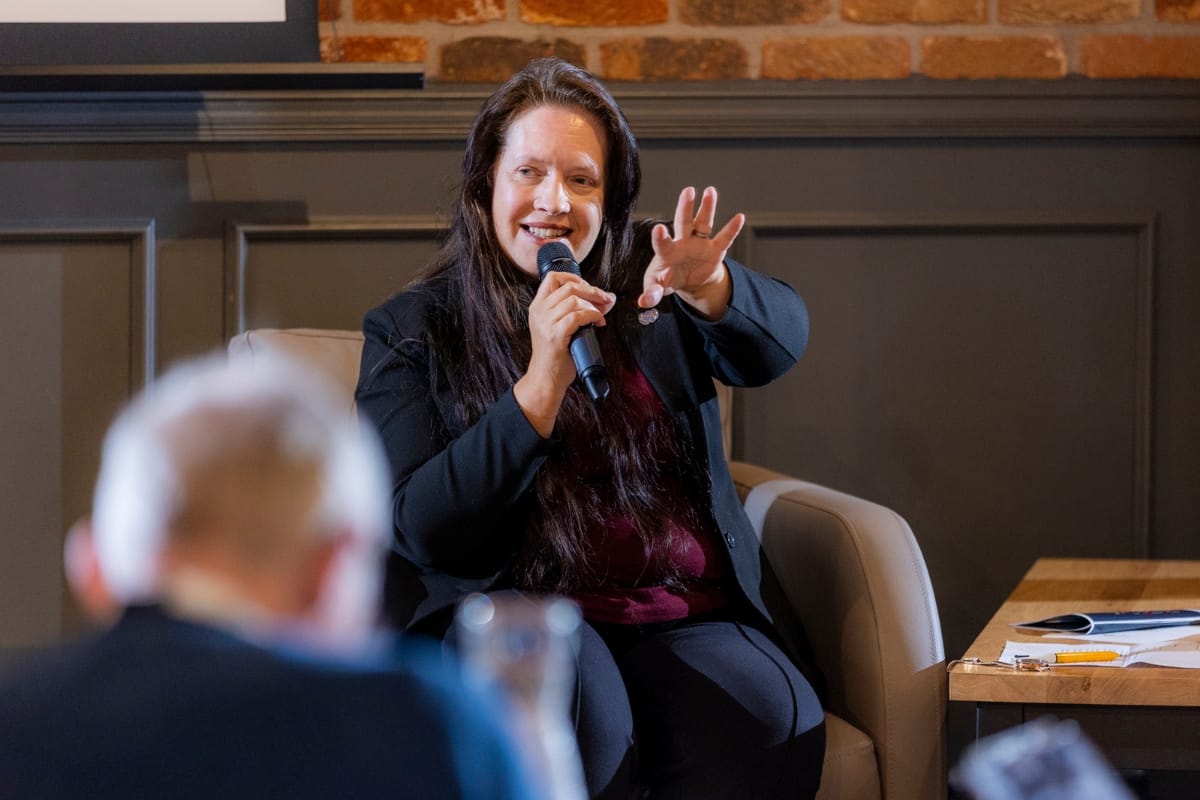
“If we then want to see products and services adopted in countries where they are really potentially needed, we must identify target markets very carefully and understand local needs.
She adds, “Fortunately, because of RedCAT’s growing recognition and reputation, we receive significant enquires from distant destinations that include Nigeria, and recently South America.
No slam dunk
“However, that is not a done deal!
“What might be designed and made in Lancashire is not automatically seen as a popular solution in developing economies where costs may be of paramount importance.
It is therefore essential to address local environmental and commercial development problems with individually bespoke solutions.
“We can’t just say ‘buy this product or service developed in the UK because you have no alternative’ when it probably appears to be expensive with long and distant maintenance and upgrade chains.
Beware cheaper unsustainable alternatives
“A big risk for us and our staunch investors is that there will be, for example in the case of energy, cheaper and more attractive hydrocarbon options.
“Our answer is to show significant local gains – such as the very real possibility of manufacturing in-country with local skills, labour and near-to-hand supply chains,” Miranda adds.
“Crucially, because many low carbon solutions pioneered by Lancashire innovators are designed with this in mind, they can meet integrated environmental, commercial and philanthropic aims.”
Locally endorsed products
Examples include River Power Pod (RPP) a simple but sophisticated technology of mini-standalone turbines that capture vital watts in developing countries which are manufactured locally using 3D printers that recycle plastic waste – including non-metallic bearings!
Another is Lancaster-based CAGE Technologies which by putting huge volumes of combustible gases ‘harvested’ from farm slurry lagoons, ‘empty’ aerosol cans, and processed plastics that routinely go to waste worldwide to good energy-generating use, hopes to displace significant oil and gas emissions and help the Global South reach net-zero.
Everybody wins. Our innovators are part of a UK green-tech sector with a projected value of circa £1 trillion by 2030. Simultaneously, they are part of a parallel world sector with similarly high forecasts.
Global presence
RedCAT teams have been on the ground most recently at COP30 in Brazil, but also COP26 in Glasgow, COP27 in Sharm El-Sheikh, Egypt, COP28 in Dubai, and COP29 in Azerbaijan. We will also be at COP17, the Nature and Biodiversity COP to be held in Yerevan, Armenia in October 2026.
RedCAT trade missions
One of our goals is also to influence crucial world decisions taken in the Blue Zone.
However, we are accompanied by enthusiastic North West company delegation members who make new connections and initiate new contracts via the Green Zone and direct RedCAT introductions which in the past met have led successfully to new suppliers, new financiers, and new partners.
We have historically strong ties with key Armenian businesses that we will be building on for COP17 in October 2026
CBAM decarbonisation lifeline
“What also works to our advantage is the Carbon Border Adjustment Mechanism (CBAM),” Miranda continues.
CBAM is a global climate policy tool that puts a carbon price on imported carbon-intensive goods – aluminium, iron, steel, cement, fertilisers, hydrogen, and electricity. Its aim is to ensure fair prices and stop ‘carbon leakages’ by preventing businesses from moving production to countries with less strict emission rules. The goal is a level playing field and reduced global emissions.
After a transitional period (Oct 2023 – Dec 2025), EU CBAM moved to its definitive phase on 1 January 2026. Importers must now purchase CBAM certificates to cover embedded emissions.
UK CBAM will be introduced on 1 January 2027 to ensure imported goods face a similar carbon price to domestic products.
Heat Engineer Software’s German heat balancing export success
A Danish invitation for a Lancashire low carbon innovator to work at the heart of Europe
– Innovation and excellent delivery is a winning formula others might copy
Heat Engineer Software’s success is based on a simple but impressive and well-scaled energy efficiency and waste reduction concept that has caught the eye of the world’s largest pump manufacturer, plus the clean-energy-conscious German government.
HES runs a development centre in Oxfordshire and a main headquarters in Padiham from where it drives its commercial success, explains CEO Ben

Richard Cartwright Founder & CTO of HES with Ben Duckworth, CEO
Flying the UK and North West flag
“Grundfos is the go-to European company for many energy-efficient water solutions with more than 19,000 employees,” explains Ben.
“Heat balancing is too often not seen as a key priority in the UK as of yet. But it figures highly in Germany. All buildings lose heat. Properly calculating room-by-room heat loss directly aids better system designs and supports minimisation of energy wastage which is a key step in decarbonisation.
“This is where importance of our software has been recognised by Grundfos,” Ben continues.
“They approached us in the UK to help with their aim to support installers’ and homeowners’ access the German government subsidies which are available for heating system improvements. A key component of these subsidies is a verified heat loss calculation, which determines the precise energy needs of a building; a service provided through the Heat Engineer Software platform.
High profile identity
HES creates and maintains its company and brand recognition through in-house PR, says Ben who in a previous life was a marketing manager director for 11 years.
The new European relationship was sealed when the HES team was invited to Denmark where they were able to integrate their innovation seamlessly into the wider Grundfos German offer.
International activity
It is not the first time, however, that the 15-staff-member company has worked overseas. Its client base includes customers in Australia, New Zealand, France, and Spain. It also works with many large boiler and heat pump manufacturers around the world.
“We have a solution that works around the world and our clients come to us,” Ben adds.
RedCAT Network
He is also a very enthusiastic RedCAT supporter.
As such, he regularly attends RedCAT Network meetings as a successful forum where fellow innovators come together to tackle global problems on a world stage from Lancashire within a wide environmental space!
The Network’s goal in bringing together low-carbon technology innovators, designers, manufacturers, and installers, is to accelerate green-tech commercialisation with the help of expert support and local supply chains, plus connections for funding and market deployment.
Technical details
Grundfos’ mobile app for iOS and Android streamlines the hydraulic balancing of heating systems that use compatible Grundfos pumps. It also guides installers, measures flows, generates reports, improves efficiency, reduces system noise, and ensures optimal comfort.
The aim is to improve home comfort with desired temperatures in all rooms by balancing radiator, underfloor heating, and combined systems remotely.
Exporters have added £23 billion to the UK economy over five years
A new study shows the impact of UKEF export credit on UK industry and supply partners
– More than 100,000 UK businesses are now part of export-linked supply chains
A new Oxford Economics study underscores the significant impact of UK Export Finance (UKEF) – the government’s export credit agency – in supporting businesses and local supply chains.
It finds that £23 billion was added to the UK economy through exports backed by UKEF in the last half decade, supporting circa 66,000 full-time equivalent jobs annually across key industrial sectors. More than 100,000 businesses are now in export-linked supply chains on the UKEF’s customer base,
The study also shows that UKEF customers have supported an estimated 115,000 UK businesses across the country.
Continuous journey
The findings demonstrate that when UKEF backs UK exports, the resulting benefits “cascade through UK supply chains, generating opportunities for firms to win contracts, grow their order books and create jobs in communities across the country.”
Secretary of State for Business and Trade, Peter Kyle, adds: “Exports fuel growth, and UKEF has enabled thousands of companies to take British products and services to customers worldwide.
“But we must go further. I will use everything in my power to ensure businesses can scale here in the UK. This means expanding the firepower of UKEF to help many more homegrown success stories go global and boost our economy.”
Number of people living in extreme heat could double with a 2°C rise by 2050
Circa 41% of the world’s future population to face extreme heat with exceptions
– The tropics and southern hemisphere will be hit worst – but the north will struggle to adapt
The new paper from Nature Sustainability studies how far and fast different regions will face temperature extremes from human-driven global warming.
Despite an end to US greenhouse gas legislation, it underlines the importance of decarbonisation.
Beware 2050 with no changes
The conclusion is that major impacts will occur around the mid-century point without rapid cuts to emissions from oil, gas and coal, with big energy demand changes for temperature management.
Northern hemisphere heating bills will fall; the cost of cooling the southern hemisphere will rise. By the century’s end energy demand for air conditioning will outstrip that for heating.
If the 2°C threshold is breached, the number of people facing extreme heat could increase from 1.54 billion (23% of the world population in 2010) to 3.79 billion (41% of the projected 2050 population).
CO2 levels are rising too fast to meet 2026 global climate targets
A current fall is a temporary reprieve from higher future rates
– The 1.5°C maximum rise target is set to be breached
Met Office scientists say this year’s atmospheric carbon dioxide increase rate is still too fast to meet a global warming rise of just 1.5°C.
The current fall in atmospheric CO2 levels is a temporary small slowdown linked to natural climate fluctuations according to concentration levels measured at the Mauna Loa Observatory in Hawaii.
Fading fortunes
This is attributed to a temporary strengthening of natural carbon sinks – such areas of tropical forest – linked to moderate La Niña conditions observed in late 2025 and early 2026.
These promote increased CO₂ absorption by plants and oceans, But the overall trend is upward, with concentrations climbing well above levels needed to cap global warming at 1.5°C.
UK to join 10 countries building a 100GW North Sea wind power grid
The Energy Secretary says it is needed to leave ‘the fossil fuel rollercoaster’
– The goal is to turn the ageing oil basin into a “clean energy reservoir”.
The “Hamburg declaration” signed by energy ministers from the UK, Belgium, Denmark, France, Germany, Iceland, Ireland, Luxembourg, the Netherlands and Norway will have a major impact.

Windfarms built out at sea with direct to multiple nation connections via high-voltage subsea cables could provide 100GW of electricity to power 143 million European homes.
The design of the hub could reduce its vulnerability to hybrid-warfare.
Energy Security and Net Zero Secretary of State Ed Miliband said the UK was “standing up for our national interest” by pushing for clean energy and getting “off the fossil fuel rollercoaster”.
Strong supply chains triumph again
The new deal – which could help attract an £867 billion offshore wind investment by 2040 – comes shortly after US president Donald Trump criticised UK plans to phase out North Sea oil and gas production and European wind power.
The latest agreement reaffirms Europe’s commitment to wind power and building 300GW of offshore wind capacity in the North Sea area by 2050.
Dhara Vyas, CEO of Energy UK, commented that: “This deeper cooperation on supply chains, standardisation and shared infrastructure is not just a strategic necessity, it is the most effective way to bring down energy costs for households and businesses while fuelling sustainable economic growth and high-value jobs for years to come.”
